|
|
|
|||||
|
||||||


|
|
| |||||||||||||||
|
| ||||||||||||||||||||||||
|
Fast
Growing Trees Fastest
Deciduous |
|
Faster
Deciduous
Evergreen |
|
Fast
Deciduous
Evergreen |
|
Fast Growing
Hedging Plants
Deciduous
Evergreen |
|
Buy Seeds
|
|
|
|
|||||
|
||||||
|
|
|
|||
|
Fast Growing
Hedging Plants
Deciduous
Evergreen |
|||
|
Buy Seeds
|
|
|
|
|||||
|
||||||
|
|
|
||||
|
Fast Growing
Hedging Plants
Deciduous
Evergreen |
||||
|
Buy Seeds
|
Lore - Trees |
|
Gardening is an inexact science and surrounded by centuries of tradition, folklore, myth and superstition. Hidden amongst it is some age old wisdom and also some age old cobblers.
|
Connected pages Botanic Latin | Christmas | Cures and gardening tips | Trees | Vegetables / edible plants / Wild plants |

|
|
If the sun could be seen shining through the branches of an Apple tree on December 25th - Christmas Day, then the owner of the tree, if a farmer, would reap a healthy crop the following summer. If the farmer wanted to ensure that this would happen he would have put a piece of toast in the fork of the tree, or the largest Apple tree in the orchard.
Wassailing
is a ceremony held in areas where cider was made, such as Somerset and the West
Country of England. Celebrations focused on giving thanks to the wood spirits
and all spirits that safeguarded the crop, culminating in songs and verses being
chanted whilst the remaining cider was thrown over the trees.
Apple twigs make good divining rods (as good as any others that is).

|
In Dorset, the number of leaflets on an Ash leaf could be used to predict the romantic future for girls. An even Ash leaf
in my hand The
even Ash leaf in my bosom |
||
 Placing
ash berries in a cradle prevents the child from being traded for a
changeling.
| |
It was believed that so much hostility exists between adders and ash trees that if an adder is placed in a circle of ash leaves broken only by fire, it would go through the fire to escape.
Irish emigrants to America carried pieces of ash with them because its wood was a charm against drowning.
In England naked children were passed through cleft pollard ashes before sunrise as a cure for rupture.
Aspen is known as the "shivering tree" as the leaves are thought to continuously tremble. There are many legends associated with aspens and how they came to tremble.
One is that Christ's cross was made from the wood of the Aspen tree, the tree was so filled with grief and remorse at being connected with the Crucifixion that it has trembled ever since.
A similar legend from Germany is that the Holy Family were walking in a forest and all the trees bowed reverently. The only tree that didn't was the Aspen, the Holy Child cursed the tree, and the leaves began to tremble and does so to this day.
Traditional
Russian Proverb
'There
is an accursed tree
which trembles without even a breath of wind.'
The Aspen has also been thought
to help cure fevers. You need to take nail clippings from the sick person and
place them in a hole cut in the trunk. The hole should then be covered again
to seal the tree.
Diviners in search of water hidden underground are known to often use forked branches taken from the Beech tree traditionally called 'Wishing Rods'.
 Birch trees are the favourite
trees of mythical creatures which inhabited Russian Forests known as
"Forest Devils" or "Genii of the Forest".
Birch trees are the favourite
trees of mythical creatures which inhabited Russian Forests known as
"Forest Devils" or "Genii of the Forest".
These beasts were said to view the world from the top of the trees. Able to transform their shape at will, the same height as trees when in the forest and as small as the smallest blade of grass when on open land. They may be made to appear by cutting Birch branches and placing them in a circle with the points towards the centre.
Placing a branch of the Birch tree above the front entrance to a property was thought to provide protection from any evil spirits and misfortune.
The bark of the Birch tree was
traditionally used in ancient times for writing as it is extremely
durable.
Repeat this
short rhyme when counting the number of Cherry stones you have after a meal
and you will know if and when you are to marry.
1 - This year,
2 - Next year,
3- Sometime,
4 - Never - back to 1
The owner
of a Cherry tree could be sure of having a rich crop of fruit if the first
cherry to ripen was eaten by a woman who recently gave birth to her first
child.
Elder flowers were feared - Fen people though that if the scent was inhaled for long, a deep coma and then death would follow.
Branches of elder were buried with the dead to protect them from evil spirits.
Elder-wood was used for the whip handles of hearse drivers.
The English believed that burning elder logs brought the devil into the house.
The elder is associated with witches, who are said to sometimes disguise themselves as elder trees.
It
is said to be unlucky to break off an elder twig. One was supposed to ask
permission of the elder tree or bush before pruning it, and to spit three
times before cutting.
The 'Glastonbury Thorn' is a type of Hawthorn found in England (UK) and in some parts of Palestine. The tree is said to have been brought by Joseph Arimathea on a visit to England. Wherever Joseph travelled spreading the word of God, he carried a staff which he had acquired in Palestine. Legend tells that he visited the Isle of Avalon, Somerset (UK), which at one time was surrounded by water. Tired from travelling he sought rest and sat down upon "Weary-all Hill" now called "Worral Hill". Joseph stuck the staff into the ground, and legend says that it took root and a tree grew. A church was erected on the spot, now the site of 'Glastonbury Abbey'. The tree was seen as sacred and was reputed to only blossom on Christmas Day.
The flowers were highly prized and at one time exported around the world. It is believed that the Hawthorn had two trunks, but one was cut down. The perpetrator was revenged according to legend having one of his eyes taken out by the thorns in the process.
'He
was well serv'd for his blind Zeale, who going to cut doune an ancient white
Hauthorne-tree, which, because she budded before others, might be an occasion of
Superstition, had some of the prickles flew into his eye, and made him
Monocular.'
James
Howell, 'Dodona's Grove' 1644
The flowering of the Hawthorn tree is a sure sign that winter is over and spring is underway, hence the tree has been viewed as an indicator of changes in the seasons or a weather omen. It is known simply as "May" in many parts of England as this is the month that it flowers.
The Hawthorn in ancient mythology was created from lightning.
Germans traditionally used wood of the Hawthorn in funeral pyres as it was thought to assist the souls of the dead in ascension.
Hazel can be used to decorate the
hair with individual twigs or by making a "Wishing Cap". This is
custom followed in many countries. If a person made a wish whilst wearing a
wishing cap the wish would be fulfilled.
The seeds of the hazel tree Hazel
nuts, were also believed to possess mystical powers and could be used in
divining. The nut is believed to be at its strongest on Halloween night, which
was also called 'Nutcrack Night' in England. Lovers were recommended to
use this to gain foresight into the relationship.
'Two
hazel nuts I threw into the flame,
And to each nut I gave a sweetheart's name.
This, with the loudest bounce me sore amazed,
That, with a flame of brightest color blazed.
As blazed the nut, so may thy passion grow,
For 'twas thy nut that did so brightly glow.'
Gray
Passing a young child through
the branches of this tree has traditionally thought to encourage good health and
a long life for the child.
According to Alsatian folklore, placing branches of the Maple in a house would ensure protection against bats who would then not dare enter. It would also ensure that any nesting storks were safe against disturbance or even the chicks being killed whilst still in their shells.
|
|
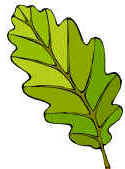
Oak Trees. Can any other plant or tree have so many myths and legends surrounding it? not to mention the very real part that this tree had to play in England's role in world history. For hundreds of years oaks provided the building material for her naval warships, the source of England's "Heart of Oak" Here are a few of the less weird ones.
|
|||
| The oak is said to be sacred to: Allah - Jehovah -
Zeus - Jupiter - Thor - Mars - the Dagda - Hercules - Hou, the oak god
of Guernsey - Janicot, the Basque oak god - El, the Middle Eastern oak
god - Jove - Picus - Cernunnos - Herne the Hunter - Taranis - Teutates
- Belenos - Donar / Dunar / Thunar - Perkunas - Perun - Taraa - Baldur
- Viribius - Janus. It is also the tree of the wild ox-god.
| |
Beware
of an oak
It draws the stroke.
Europe
| Primitive Europeans believed that
oak fire strengthened the sun. Sacrifices were made to sacred oaks in
Europe until well into the Middle Ages.
| |
Turn your cloaks
For fairy folks are in old oaks.
Acorns
Magic
 The Welsh have traditionally
considered the Rowan to be a sacred tree. It is planted in churchyards to
protect and act as a warning to negative forces and evil spirits.
The Welsh have traditionally
considered the Rowan to be a sacred tree. It is planted in churchyards to
protect and act as a warning to negative forces and evil spirits.
Coffins were rested under a Rowan tree on the way to the funeral rather than leave it open and vulnerable to approaches by such forces.
The mystic properties of the Rowan tree have been feared by witches.
Ancient
Song : 'Laidley Worm of Spindleton's Heuglis'
Their
spells were vain, the boys returned
To the Queen in sorrowful mood;
Crying that 'Witches have no power
Where there is Rowan-tree wood.
Since ancient times the Yew has been viewed as a protector of the dead.
As an evergreen it represents everlasting life and the Yew tree is widely planted in graveyards across Europe.
Some people even believed that the removal or cutting down of the tree would result in misfortune and dire consequences.
Like the oak, the Yew has a particular part to play in the history of Great Britain as its wood was used to make longbows, used in particular by Welsh archers to end the supremacy of the knight in the middle ages and secure victories over the French - Yew longbows could fire armor piercing arrows over long distances so that heavily armed and armored knights never had to be fought head-on.
About us. General queries and emails to
Last
updated
18 April 2010
Copyright © Paul Ward 2000 - 2010
About us. General queries and emails to
Copyright © Paul Ward 2000 - 2010
About us. General queries and emails to
Copyright © Paul Ward 2000 - 2010
About us. General queries and emails to
Copyright © Paul Ward 2000 - 2010
 Design |
Decks |
Patios |
Plants |
Tips |
Lawns |
Questions? |
Structures |
I like |
This month |
Over the fence |
Books | Privacy policy
Design |
Decks |
Patios |
Plants |
Tips |
Lawns |
Questions? |
Structures |
I like |
This month |
Over the fence |
Books | Privacy policy
Site map | Feedback
|
Snow blower

Design |
Decks |
Patios |
Plants |
Tips |
Lawns |
Questions? |
Structures |
I like |
This month |
Over the fence |
Books | Privacy policy |
Site map
Design |
Decks |
Patios |
Plants |
Tips |
Lawns |
Questions? |
Structures |
I like |
This month |
Over the fence |
Books | Privacy policy |
Site map
Design |
Decks |
Patios |
Plants |
Tips |
Lawns |
Questions? |
Structures |
I like |
This month |
Over the fence |
Books | Privacy policy |
Site map


 Ash
Ash Beech
Beech Hazel
Hazel Maple
Maple